
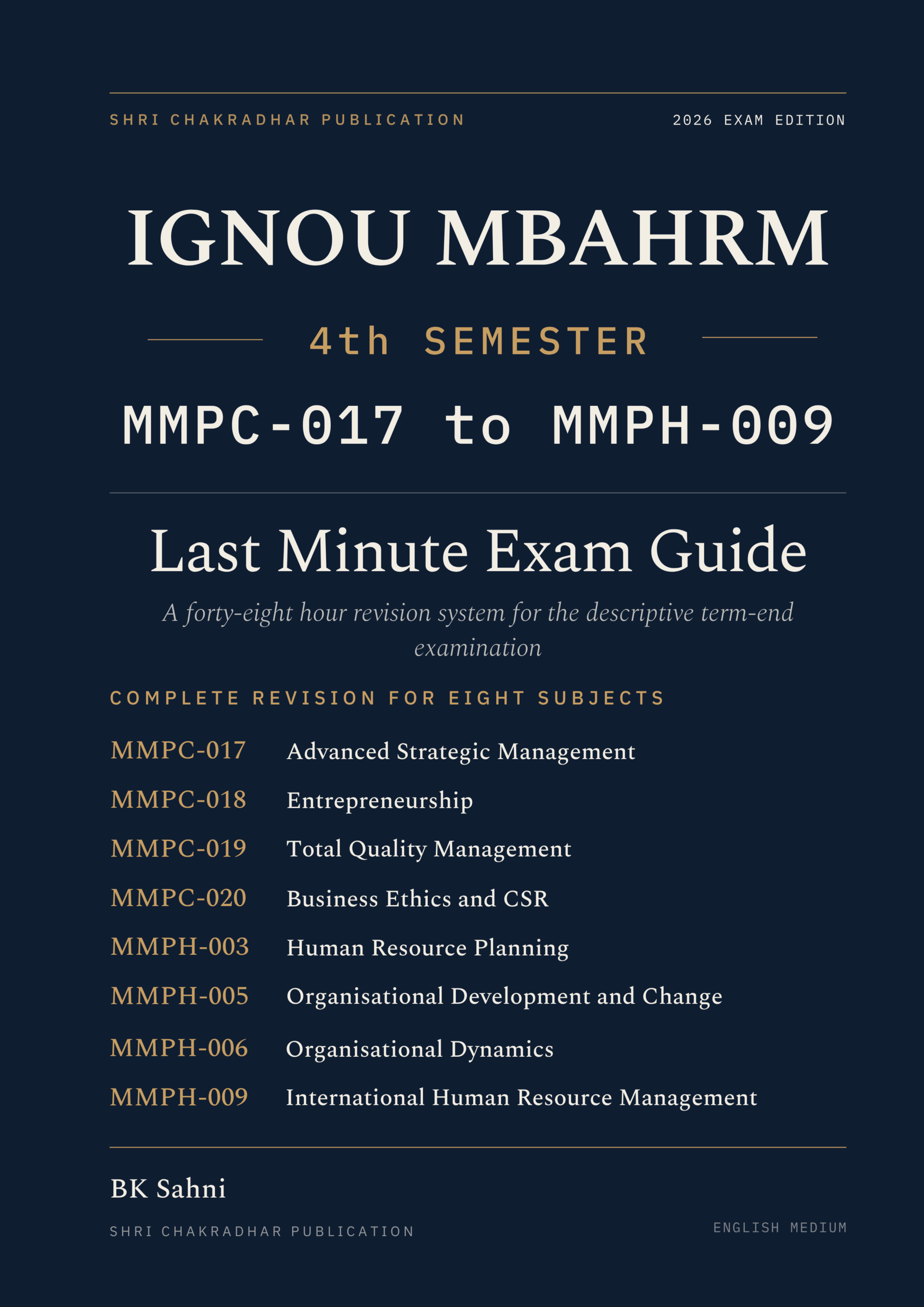
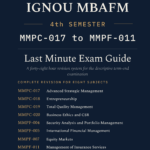
IGNOU MBA (HRM) 4th Semester Book (MMPC-017 to MMPH-009) — Combined Last Minute Exam Study Guide
Original price was: ₹499.00.₹249.00Current price is: ₹249.00.
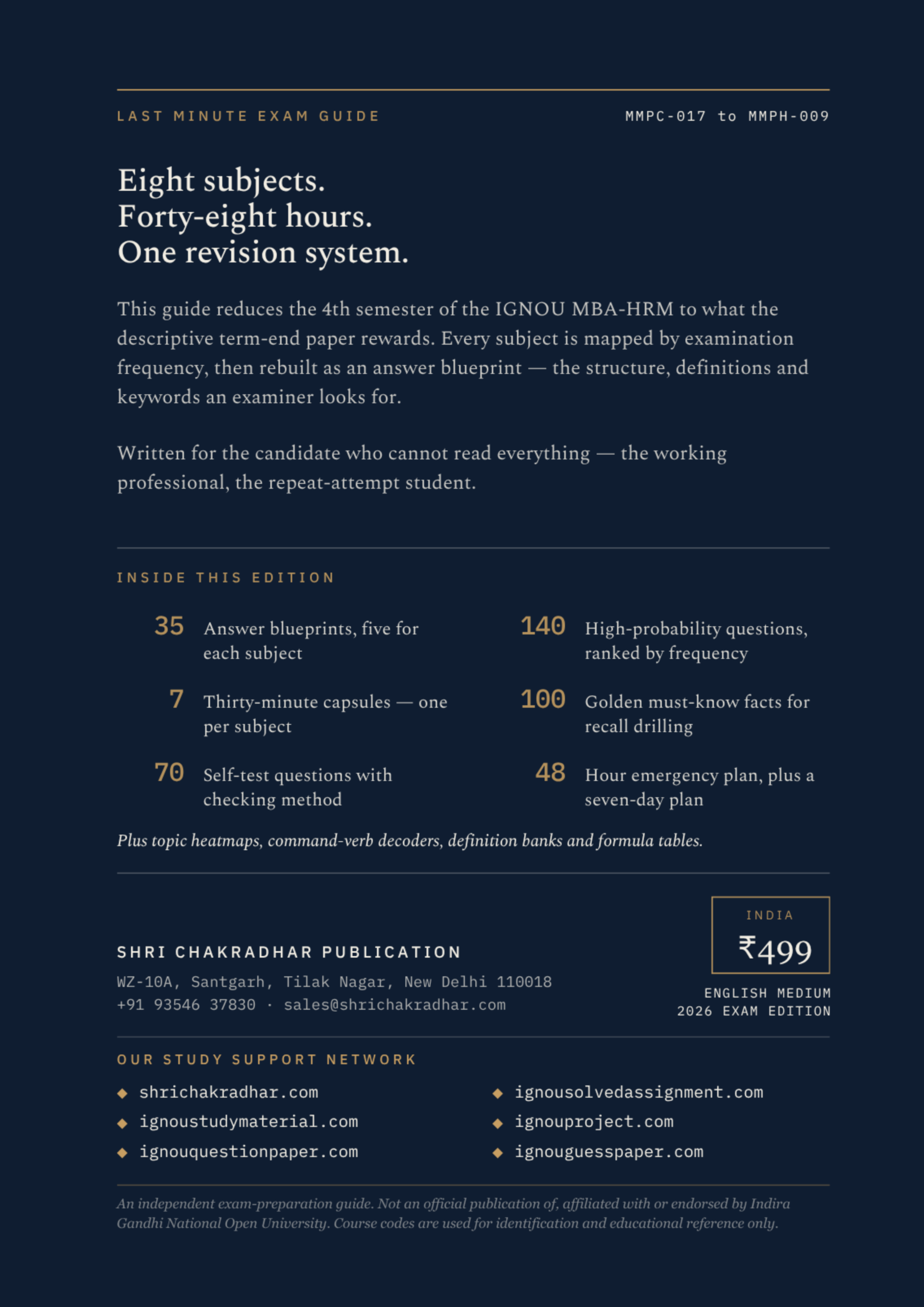
Revise strategy, entrepreneurship, quality, ethics and advanced HR systems through one 4th Semester study sequence. The 2027 English Medium IGNOU MBA (HRM) Last Minute Exam Guide combines MMPC-017, MMPC-018, MMPC-019, MMPC-020, MMPH-003, MMPH-005, MMPH-006 and MMPH-009 in one 160-page book.
- 128 numbered model Q&As, with 16 selected answers and an individual Exam Note for every subject
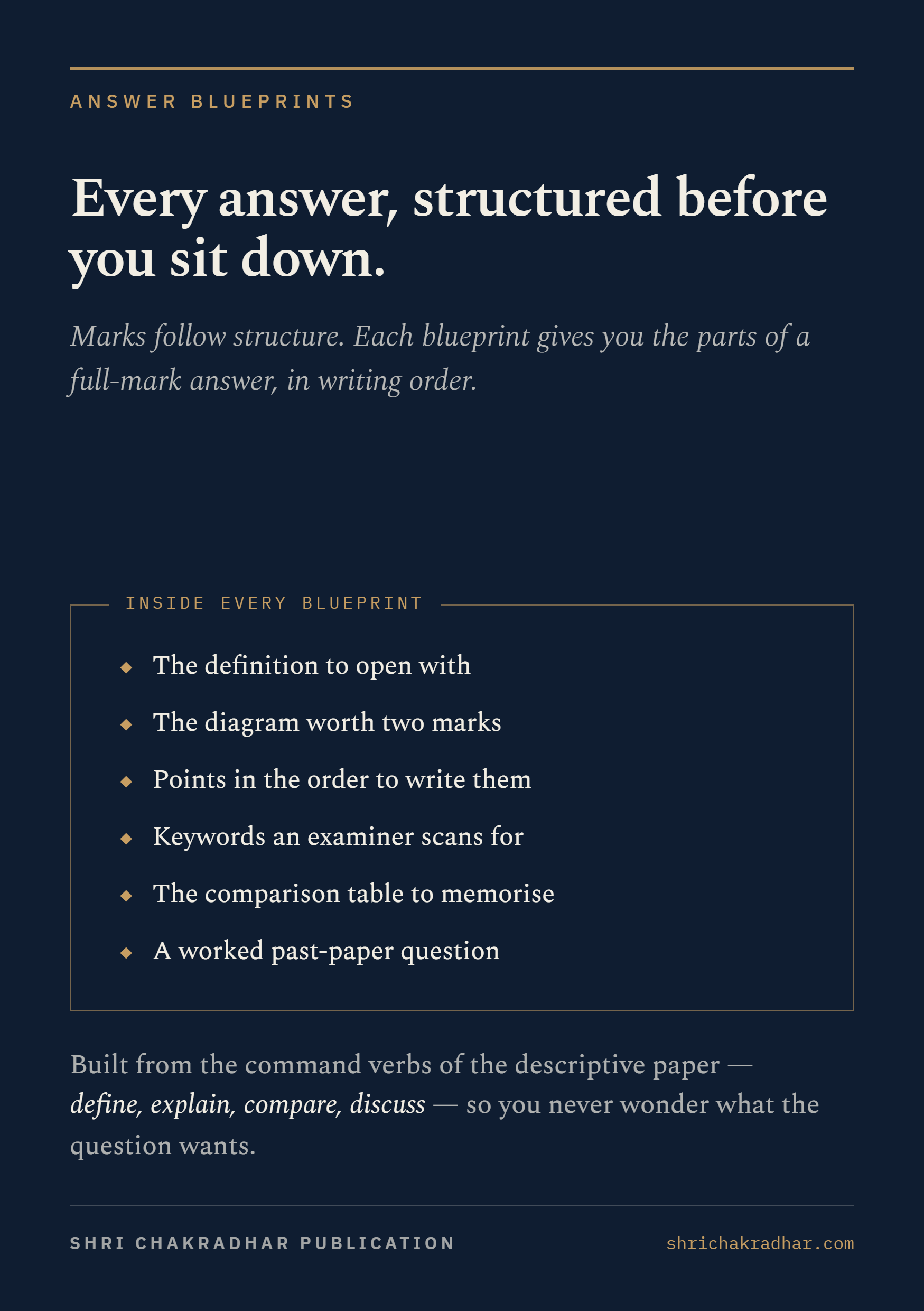
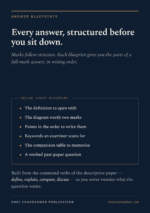
- 40 reusable Answer Blueprints, covering frameworks, processes, comparisons, statutes and applied HR analysis
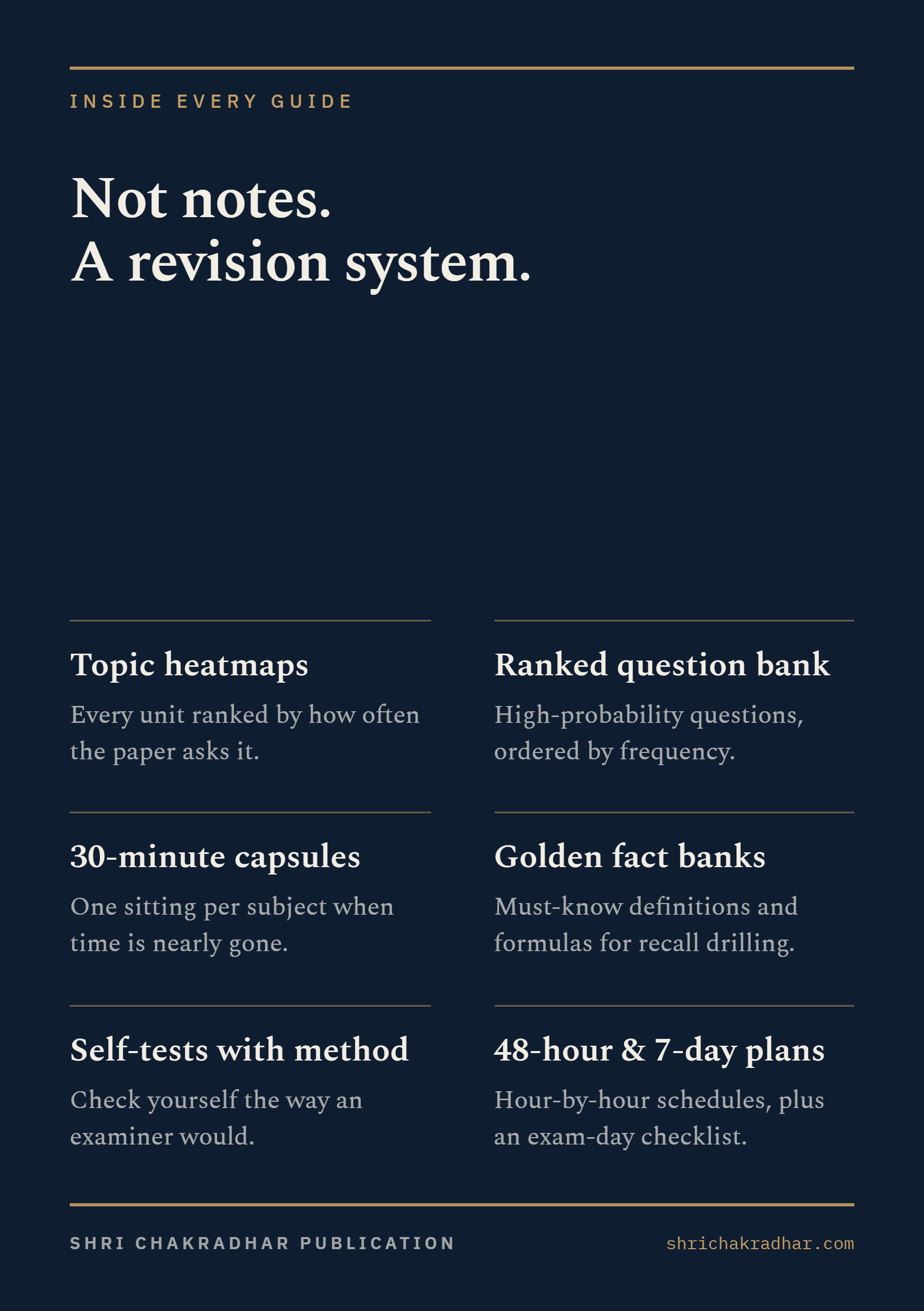
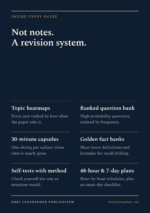
- 24 subject-level navigation aids through eight heatmaps, eight command decoders and eight revision toolkits
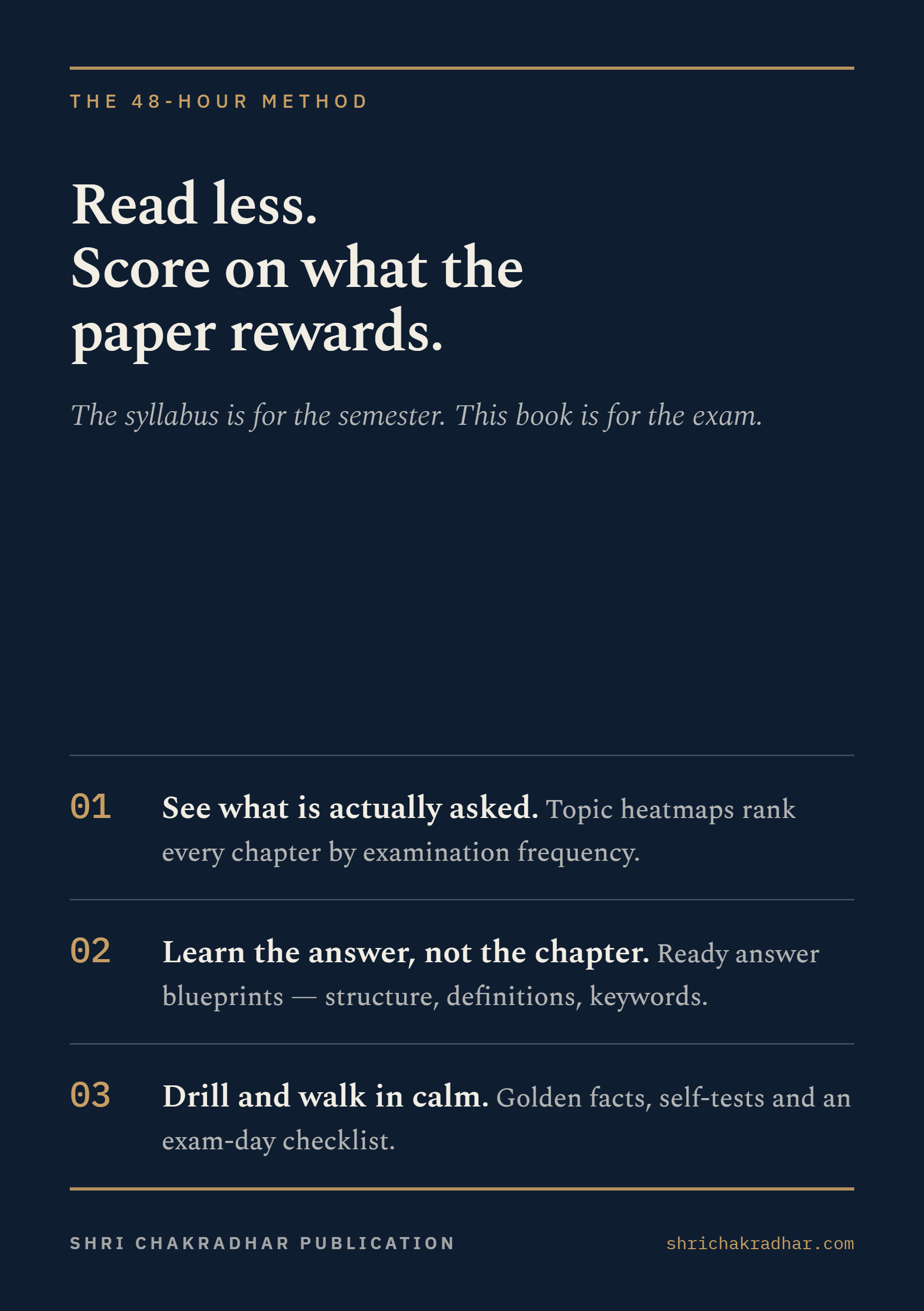
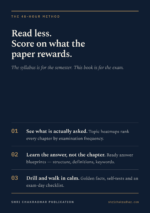
- Eight final-30-minute capsules plus reading routes for 48, 24, 12, 6, 3 and 1 hour
- 180 recall checks through 100 golden facts and an 80-question self-test with answers
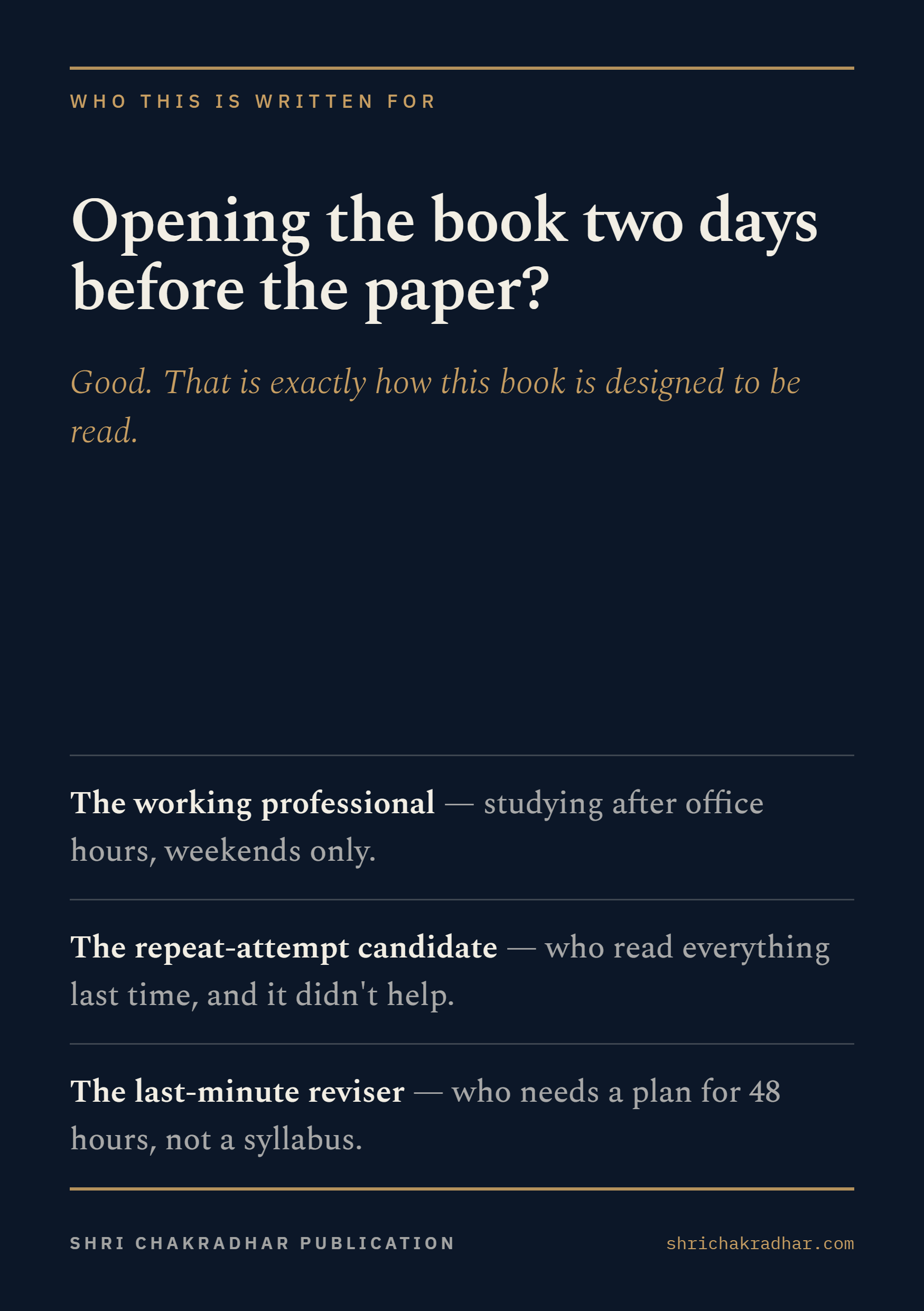
Suitable for MBA (HRM) distance learners who have studied the prescribed blocks and now need structured revision across theory, policy, quality tools, organisational behaviour and international HR practice.
Written by BK Sahni — IGNOU education expert and author, guiding distance-learning students since 2010.
IGNOU MBA (HRM) 4th Semester Book — Eight Papers from Corporate Strategy to International HRM
The IGNOU MBA (HRM) 4th Semester Book is a 160-page English Medium Last Minute Exam Guide for the 2027 Exam Edition. It combines MMPC-017, MMPC-018, MMPC-019, MMPC-020, MMPH-003, MMPH-005, MMPH-006 and MMPH-009 for revision before the June and December Term-End Examinations. The title is available on IGNOU Study Material, an independent platform for exam-focused IGNOU help books.
The eight-paper sequence moves from corporate direction and venture creation to quality systems, ethical responsibility and specialised HR practice. It therefore asks students to switch among strategy frameworks, Indian enterprise schemes, quality tools, statutory CSR provisions, forecasting methods, change models, behavioural diagnostics and cross-cultural employment decisions. This guide keeps one recognisable A-to-F chapter route while changing the answer logic for each subject, so a Porter analysis does not read like a Section 135 response and an expatriate-pay answer is not treated like an HR audit.
About the IGNOU MBA (HRM) 4th Semester
The IGNOU MBA (HRM) 4th Semester represented in this book contains four common management courses and four Human Resource Management specialisation papers. MMPC-017 examines strategy at corporate, business and functional levels; MMPC-018 follows an enterprise from opportunity to finance and growth; MMPC-019 studies organisation-wide quality; and MMPC-020 connects moral reasoning, governance and CSR.
The MMPH papers then turn towards workforce planning, planned change, organisational behaviour and international employment. A learner may need to classify Ansoff growth routes, validate a business model, explain DMAIC, state CSR thresholds, choose a forecasting method, apply Lewin or Kotter, diagnose power and role systems, and compare balance-sheet with going-rate expatriate pay. Preparation must therefore combine attributed theory, exact process steps, statutory figures, comparison tables and applied organisational examples.
What This Book Covers
Each of the eight course chapters follows the same six-section revision architecture. The repeated order lowers navigation time, while the frameworks, definitions, institutions and examples remain specific to the paper being studied.
- Section A — Subject Opener and Topic Heatmap: sets out the paper character, major blocks, examination strategy and graded priority of recurring themes.
- Section B — Command Verb Decoder and Golden Rule: shows how instructions such as justify, critically analyse, distinguish, describe, evaluate and illustrate change the expected response.
- Section C — Five Answer Blueprints: provides reusable structures, compact answer skeletons and course-specific keyword sets.
- Section D — Sixteen High-Probability Q&As: presents selected model responses, with an individual Exam Note after every numbered answer.
- Section E — Revision Toolkit: consolidates thinkers, definitions, comparison tables and common mistakes for the subject.
- Section F — Thirty-Minute Revision Capsule: reduces the paper to five must-remember concepts, priority questions, emergency starters and golden keywords.
Across eight subjects, the verified total is 40 Answer Blueprints, 128 numbered high-probability Q&As and 128 Exam Notes. The book also contains eight topic heatmaps, eight command decoders, eight revision toolkits and eight thirty-minute capsules. Semester-wide material includes a dashboard, a 48-hour emergency plan, reading routes for 48, 24, 12, 6, 3 and 1 hour, 100 golden facts, an exam-day checklist, 80 self-test questions, an answer key and score interpretation.
Subject-wise Coverage
MMPC-017: Advanced Strategic Management
MMPC-017 moves from strategy, corporate policy and strategic intent to growth, integration, diversification, internationalisation and control. Ansoff, Porter, Prahalad and Hamel, Barney, Dunning, Bartlett and Ghoshal, Chandler, Rumelt, Kaplan and Norton provide the main frameworks. Students revise stability variants, mergers, alliances, core competence, VRIO, the integration-responsiveness grid, IT architecture, innovation, implementation, the 7-S alignment logic, balanced-scorecard evaluation, turnaround and governance. The chapter’s answer method is distinctive: define the strategy, state its fit conditions, explain risks, attach an Indian corporate case and end with a reasoned verdict.
MMPC-018: Entrepreneurship
MMPC-018 follows the entrepreneur from idea recognition to enterprise continuity. It covers Schumpeter’s innovation, McClelland’s need for achievement, Danhof’s entrepreneur types, women and rural entrepreneurship, opportunity screening, Drucker’s innovation sources, the Timmons triad, Osterwalder’s nine-block canvas, MVP validation, technical, market and financial feasibility, business plans, institutional support, funding stages, venture capital, MSME schemes, family enterprise, intrapreneurship, social entrepreneurship, growth and sickness. Indian anchors include Udyam registration, SIDBI, NABARD, NSIC, KVIC, DICs, PMEGP, CGTMSE, MUDRA, Stand-Up India and Startup India.
MMPC-019: Total Quality Management
MMPC-019 connects quality philosophy with the tools that make improvement observable. Deming’s system view and PDCA, Juran’s trilogy, Crosby’s zero defects, Feigenbaum’s cost-of-quality categories, Ishikawa’s seven tools, Shewhart’s control charts, Taguchi’s loss function, Shingo’s poka-yoke and Ohno’s wastes form the conceptual base. The chapter covers customer focus, employee involvement, kaizen, brainstorming, process control, Six Sigma and DMAIC, ISO 9001:2015, integration with ISO 14001 and ISO 45001, audit, safety, quality circles, benchmarking and awards. Answers pair every principle with an operating tool and an applied example.
MMPC-020: Business Ethics and CSR
MMPC-020 requires both philosophical reasoning and statutory accuracy. Bentham, Mill, Kant, Aristotle, Rawls, Gilligan, Habermas, Kidder, Friedman, Freeman and Carroll appear beside ethics-versus-law, egoism, utilitarianism, duty, rights, justice, care and discourse. Students revise ethical dilemmas, the navigation wheel, Kidder’s nine checkpoints, tone at the top, incentives, whistleblowing, shareholder and stakeholder views, governance, social activism, sustainability, BRSR, GRI and the SDGs. CSR coverage retains Section 135’s three thresholds, the 2% rule, Schedule VII, committee requirements and treatment of unspent amounts.
MMPH-003: Human Resource Planning
MMPH-003 converts organisational plans into numbers, skills and timelines. Its scope includes the HRP process, strategic linkage, qualitative demand methods such as managerial judgement, Delphi and nominal groups, quantitative methods such as trend, ratio, regression and work study, internal and external supply, skills inventories, replacement charts, Markov analysis, wastage measures, job analysis, career planning, succession pipelines, HR audit, HRIS, analytics, human resource accounting, downsizing and manpower budgeting. The chapter repeatedly states the method, the data it requires, the situation in which it is preferred and the limitation that must qualify its use.
MMPH-005: Organisational Development and Change
MMPH-005 studies why organisations change and how planned interventions are carried through. It covers external and internal triggers, planned and emergent change, resistance, Lewin’s force-field model, Kotter’s eight steps, ADKAR, Beckhard’s change equation, Kotter and Schlesinger’s six resistance methods, OD values, action research and change-agent competencies. Intervention coverage includes process consultation, survey feedback, team building, organisational mirroring, role analysis and role efficacy. Schein’s culture levels, turnaround, mergers, BPR, outsourcing, learning organisations and evaluation extend the chapter from diagnosis to institutionalisation.
MMPH-006: Organisational Dynamics
MMPH-006 applies behavioural frameworks to the forces shaping workplace action. French and Raven explain power, dependence clarifies influence, and political behaviour is linked to scarce resources and ambiguous goals. Burns and Bass structure transactional and transformational leadership; Tuckman and Janis organise group development and groupthink. Pareek’s role space, role set, efficacy and stress appear with the Role Analysis Technique. The chapter also covers communication, conflict, teams, Hofstede, Schein’s culture levels, socialisation, organisational learning and diagnosis through Weisbord, Nadler-Tushman, McKinsey 7-S and Burke-Litwin.
MMPH-009: International Human Resource Management
MMPH-009 examines HR decisions when employees, laws and cultures cross borders. Morgan’s three-dimensional IHRM model, PCN-HCN-TCN categories and Perlmutter’s EPRG orientations establish the field. Hofstede, Trompenaars, Hall and the GLOBE study support country comparison. The expatriate cycle covers selection, family adjustment, failure, cultural training, performance appraisal, compensation and repatriation, using Tung, Mendenhall and Oddou, Black and Tahvanainen. Students also compare the balance-sheet and going-rate methods, tax equalisation, international careers, employee relations, high-performance work systems and HRM patterns in India, China and Japan.
MMPC-017 to MMPH-009 at a Glance
| Code | Subject Title | Main Revision Area | What You Take Away |
|---|---|---|---|
| MMPC-017 | Advanced Strategic Management | Growth, advantage, global strategy, implementation and control | Strategy choices explained through conditions, risks and corporate cases |
| MMPC-018 | Entrepreneurship | Opportunity, models, feasibility, institutions, finance and enterprise growth | A venture sequence linked to Indian schemes and go-or-no-go tests |
| MMPC-019 | Total Quality Management | Quality gurus, improvement tools, Six Sigma, standards and audit | Principles translated into measurable methods and prevention systems |
| MMPC-020 | Business Ethics and CSR | Ethical theories, dilemmas, governance, CSR and sustainability | Managerial reasoning supported by philosophers and statutory figures |
| MMPH-003 | Human Resource Planning | Demand, supply, job analysis, succession, audit and analytics | Workforce methods selected by data, purpose and planning horizon |
| MMPH-005 | Organisational Development and Change | Change models, resistance, interventions, culture and turnaround | Planned change linked to diagnosis, participation and reinforcement |
| MMPH-006 | Organisational Dynamics | Power, leadership, groups, roles, culture and diagnosis | Behavioural frameworks applied to visible workplace situations |
| MMPH-009 | International Human Resource Management | Culture, staffing, expatriates, global performance and compensation | Cross-border HR choices developed through country contrasts |
Key Features — All Verified From the Book
- 160-page English Medium edition: four common MBA papers and four MBA (HRM) specialisation courses appear in one combined volume.
- 40 Answer Blueprints: five response frameworks are included for every subject.
- 128 numbered model Q&As: each of the eight chapters contributes sixteen selected examination-revision questions.
- 128 individual Exam Notes: every numbered answer ends with a focused writing, framework, example or accuracy reminder.
- 24 subject-level navigation aids: eight heatmaps, eight command decoders and eight revision toolkits guide priority and checking.
- 8 thirty-minute capsules: each paper closes with concepts, priority prompts, emergency starters and keywords.
- 6 time-based routes: instructions are supplied for 48, 24, 12, 6, 3 and 1 hour of available revision time.
- 100 golden facts: the back matter gathers thinkers, years, models, schemes, statutory figures and framework sequences.
- 80 self-test questions: ten MCQs per subject lead to an answer key and score interpretation.
- Semester-level planning tools: a dashboard, two-day emergency schedule and exam-day checklist support final coordination.
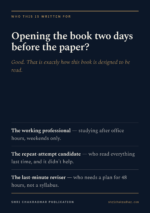
Who Should Use This Book
This guide is intended for IGNOU MBA (HRM) 4th Semester learners whose registration matches the eight codes printed on the cover. It is most useful after the prescribed blocks have been studied and the remaining task is to coordinate very different forms of examination writing across strategy, enterprise development, quality, ethics and Human Resource Management.
Working professionals and independent distance learners may value the fixed chapter route when study periods are fragmented. It can also support students who understand the subject but need clearer decisions about when to cite a thinker, list a process, use a comparison table, retain a statutory number or connect a framework to an organisational example.
How This Book Helps Students
The book turns a broad semester into repeatable revision actions. Heatmaps propose a starting order, command decoders interpret the question, and blueprints assign an answer shape. MMPC-017 demands strategy conditions and risks; MMPC-018 needs classifications, feasibility and Indian institutions; MMPC-019 joins a quality principle to its tool; MMPC-020 combines theory or law with ethical application; MMPH-003 states method, data and fit; MMPH-005 follows diagnosis through intervention; MMPH-006 identifies the behavioural framework; and MMPH-009 adds a country contrast.
The model Q&As display those forms in complete responses. Exam Notes point out common omissions, while the toolkits group names, definitions and distinctions that blur under time pressure. Capsules, golden facts and the self-test then shorten the material into recall and correction stages.
This Exam Guide and IGNOU’s Official Study Material
This Last Minute Exam Guide complements the prescribed university material; it does not replace it. The IGNOU blocks provide full unit development, academic context and extended examples that a compact revision title cannot reproduce. Students can download the official IGNOU MBA (HRM) study material free in PDF from eGyankosh and should use those resources as the primary source for all eight registered courses.
The present volume is designed for the later revision stage. Its selected questions, probability labels and rapid routes help organise time, answer structure and recall, but they neither reduce the applicable syllabus nor identify the contents of a future examination.
Why Choose This Last Minute Exam Guide
The main distinction is not simply that eight subjects are bound together. Each paper receives a different response engine inside the shared format: strategy answers test fit and risk, entrepreneurship answers name institutions and feasibility criteria, TQM answers operationalise a principle, ethics answers identify a philosopher or statutory provision, HRP answers explain method selection, OD answers move from diagnosis to reinforcement, organisational-dynamics answers apply behavioural models, and IHRM answers compare countries and employee categories.
The limits are stated clearly. This book does not include solved assignments, complete previous-year question papers, handwritten submissions or a standalone guess paper. The condensed schedules also assume earlier engagement with the prescribed learning material.
About the Author — BK Sahni
BK Sahni (Bhavya Kumar Sahni) is an IGNOU education expert, author, and the founder of Shri Chakradhar Publication Pvt. Ltd. and ignouproject.com, and he has guided 5,00,000+ IGNOU distance-learning students since 2010. He writes the Last Minute Exam Guide series — including this book — building every title on the method he has refined across a decade of IGNOU-focused work: high-probability questions, reusable answer blueprints, topic heatmaps and quick-revision capsules aligned to the current IGNOU exam pattern. He also publishes open-access research-methodology guides for IGNOU students, archived with permanent DOIs on Zenodo and indexed on Google Scholar and ORCID (0009-0005-8092-459X). Learn more about his work at bksahni.com, or browse his complete catalogue of IGNOU books on the Amazon Author Store.
How to Use the Book Effectively
Begin with the semester dashboard and choose the paper whose answer method is least secure. Read its heatmap and command decoder, then learn the purpose of the five blueprints before memorising individual answers. Reproduce selected responses from memory: state strategy fit and risk in MMPC-017, connect schemes with feasibility in MMPC-018, name tools in MMPC-019, retain philosophers and Section 135 figures in MMPC-020, practise forecasting logic in MMPH-003, sequence change models in MMPH-005, map workplace behaviour in MMPH-006 and contrast countries in MMPH-009.
Select the longest time route compatible with work already completed. Extend writing practice through IGNOU previous years solved question papers, and consult free IGNOU study support and resources on IGNOU Project where supplementary guidance is needed. Complete all 80 MCQs, reopen the relevant toolkit for every error and use the matching thirty-minute capsule only at the final recall stage.
Frequently Asked Questions
Which subjects and course codes are covered in this MBA (HRM) 4th Semester book?
The book covers MMPC-017 Advanced Strategic Management, MMPC-018 Entrepreneurship, MMPC-019 Total Quality Management, MMPC-020 Business Ethics and CSR, MMPH-003 Human Resource Planning, MMPH-005 Organisational Development and Change, MMPH-006 Organisational Dynamics, and MMPH-009 International Human Resource Management. Every subject has its own six-section chapter.
Is this one combined book or a set of eight separate guides?
It is one combined 160-page English Medium volume. The eight codes remain clearly divided into individual chapters, but the same A-to-F navigation system runs through the book. The order therefore supplies one bound 2027 Exam Edition rather than eight separately printed helpbooks.
Can this guide support the June and December Term-End Examinations?
Yes. Its framework-based answers, process maps, comparison tables, statutory checkpoints and recall tools may be used before either June or December Term-End Examination session. The high-probability labels provide a revision priority only; they do not confirm what will appear in a particular question paper.
Does the book contain solved assignments, full PYQ papers or a guess paper?
No. It does not contain solved assignments, complete previous-year question papers, handwritten answers or a standalone guess paper. Instead, it offers 128 numbered model Q&As, 40 Answer Blueprints, eight toolkits, 100 golden facts and an 80-question self-test for structured examination revision.
Can the Last Minute Exam Guide replace the official IGNOU blocks?
No. The guide condenses selected material into answer structures and rapid-revision tools, so it cannot replace the detailed concepts and complete unit progression in IGNOU’s prescribed material. Use the official blocks for foundational learning and this title for writing practice, retrieval and final consolidation.
Who should buy this IGNOU MBA (HRM) 4th Semester study guide?
The intended buyer is a learner registered for the eight course codes shown on the cover and already working through the syllabus. It is particularly relevant to employed students, independent distance learners and candidates who need one organised method across theory, statutes, organisational frameworks and cross-cultural HR decisions.
How should the 48-hour, 12-hour and 1-hour plans be used?
Choose a route according to prior preparation as well as available time. Longer plans allow chapter coverage, written reproduction and testing; shorter versions progressively narrow attention to selected questions, blueprints, capsules and golden facts. The 1-hour route is only a memory refresh after earlier study, not a substitute for learning eight courses.
Are the 128 high-probability questions predictions of the next examination?
No. They are revision-priority questions developed from past examination patterns and the prominence of topics in the study material. They can help allocate limited time and demonstrate answer form, but IGNOU may assess any relevant area of the current syllabus.
Should students verify the latest MBA (HRM) structure before ordering?
Yes. Check www.ignou.ac.in for the current programme structure, registered course combination, date sheet, study material and examination instructions. This edition follows the MMPC-017, MMPC-018, MMPC-019, MMPC-020, MMPH-003, MMPH-005, MMPH-006 and MMPH-009 arrangement stated in the uploaded book.
Important Note on Syllabus Verification
IGNOU periodically updates its programme structure, assignment requirements, examination schedule and study material. Before purchasing and while preparing, students should verify the latest MBA (HRM) syllabus, course list, date sheet and official instructions on the official IGNOU website (www.ignou.ac.in). This book is aligned to the MMPC-017, MMPC-018, MMPC-019, MMPC-020, MMPH-003, MMPH-005, MMPH-006 and MMPH-009 structure and refreshed as an annual exam edition, but official IGNOU sources are always the final authority.
Non-Affiliation Disclaimer
ignoustudymaterial.com is an independent educational publishing platform. This book and this website are not officially affiliated with, endorsed by, or operated by the Indira Gandhi National Open University (IGNOU). Course codes such as MMPC-017, MMPC-018, MMPC-019, MMPC-020, MMPH-003, MMPH-005, MMPH-006 and MMPH-009 are used solely to identify the subjects the book covers. IGNOU’s official study material and notifications remain the primary and authoritative sources for the programme.
Get Your Copy
Choose this combined HRM revision book when one coordinated source is more practical than scattered notes for eight papers. Keep the prescribed blocks as the learning base, write the frameworks independently and reserve the capsules for immediate pre-paper recall. For digital access, get the IGNOU MBA (HRM) 4th Semester Book (MMPC-017 to MMPH-009) — Combined Last Minute Exam Study Guide as a soft-copy PDF on WhatsApp.
| Weight | 250 g |
|---|---|
| Dimensions | 22 × 16 × 1 cm |




Reviews
There are no reviews yet.