
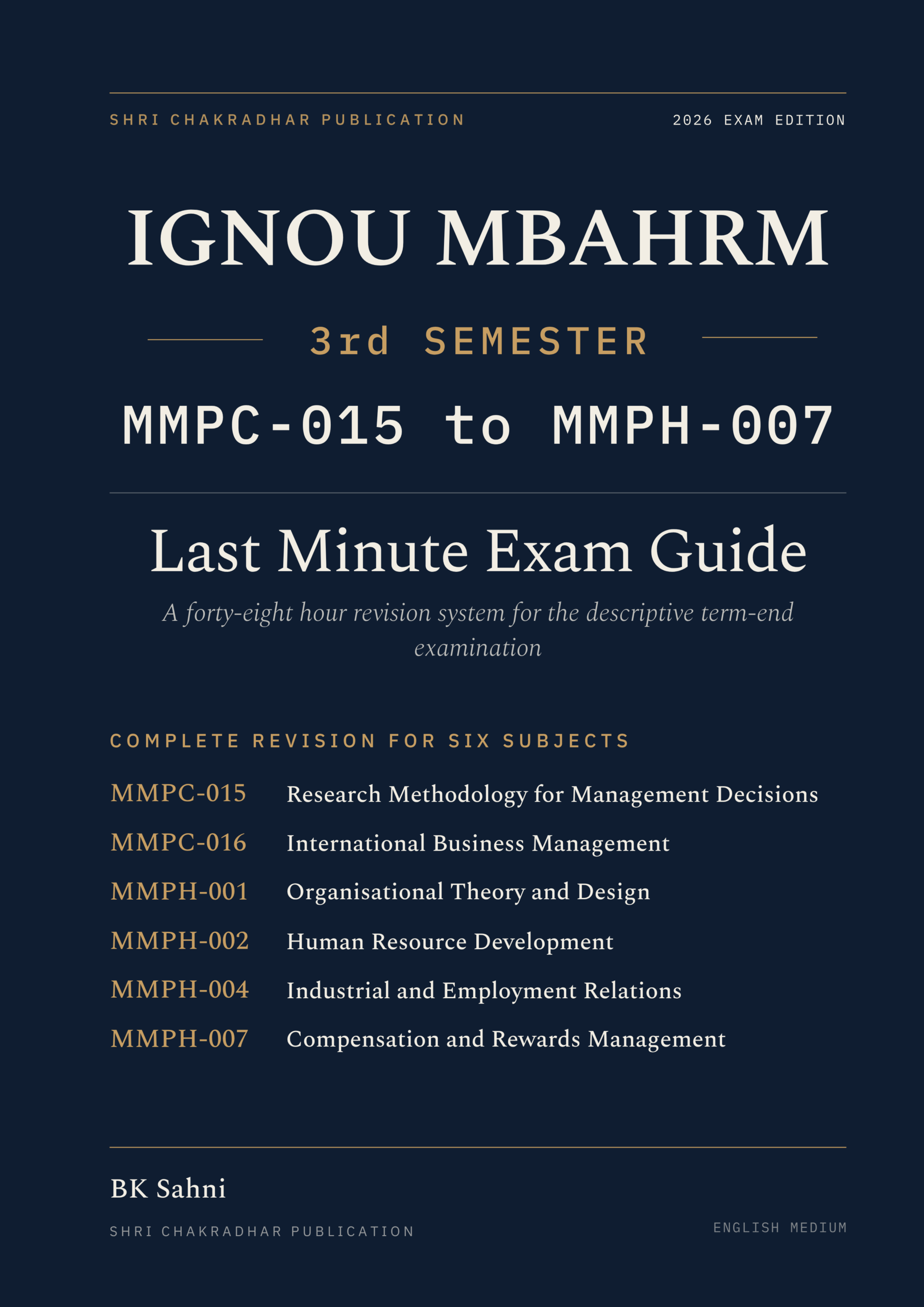
IGNOU MBA (HRM) Third Semester Book (MMPC-015 to MMPH-007) — Combined Last Minute Exam Study Guide
Original price was: ₹449.00.₹249.00Current price is: ₹249.00.
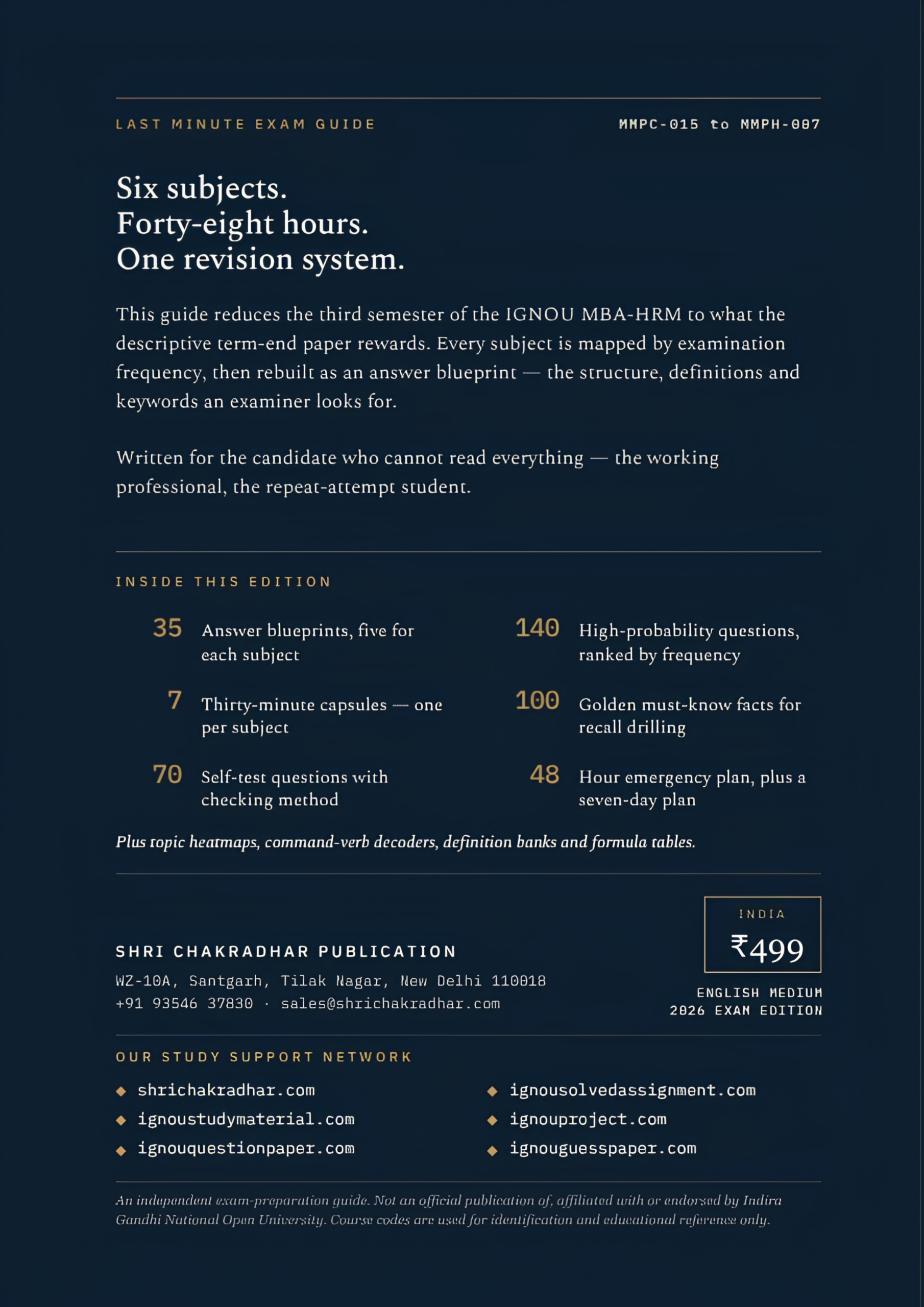
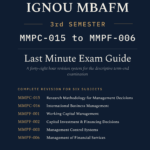
Revise the people side of management without losing the research, law and international-business foundations. This 2027 English Medium IGNOU MBA (HRM) Third Semester Last Minute Exam Guide combines MMPC-015, MMPC-016, MMPH-001, MMPH-002, MMPH-004 and MMPH-007 in one 153-page volume.
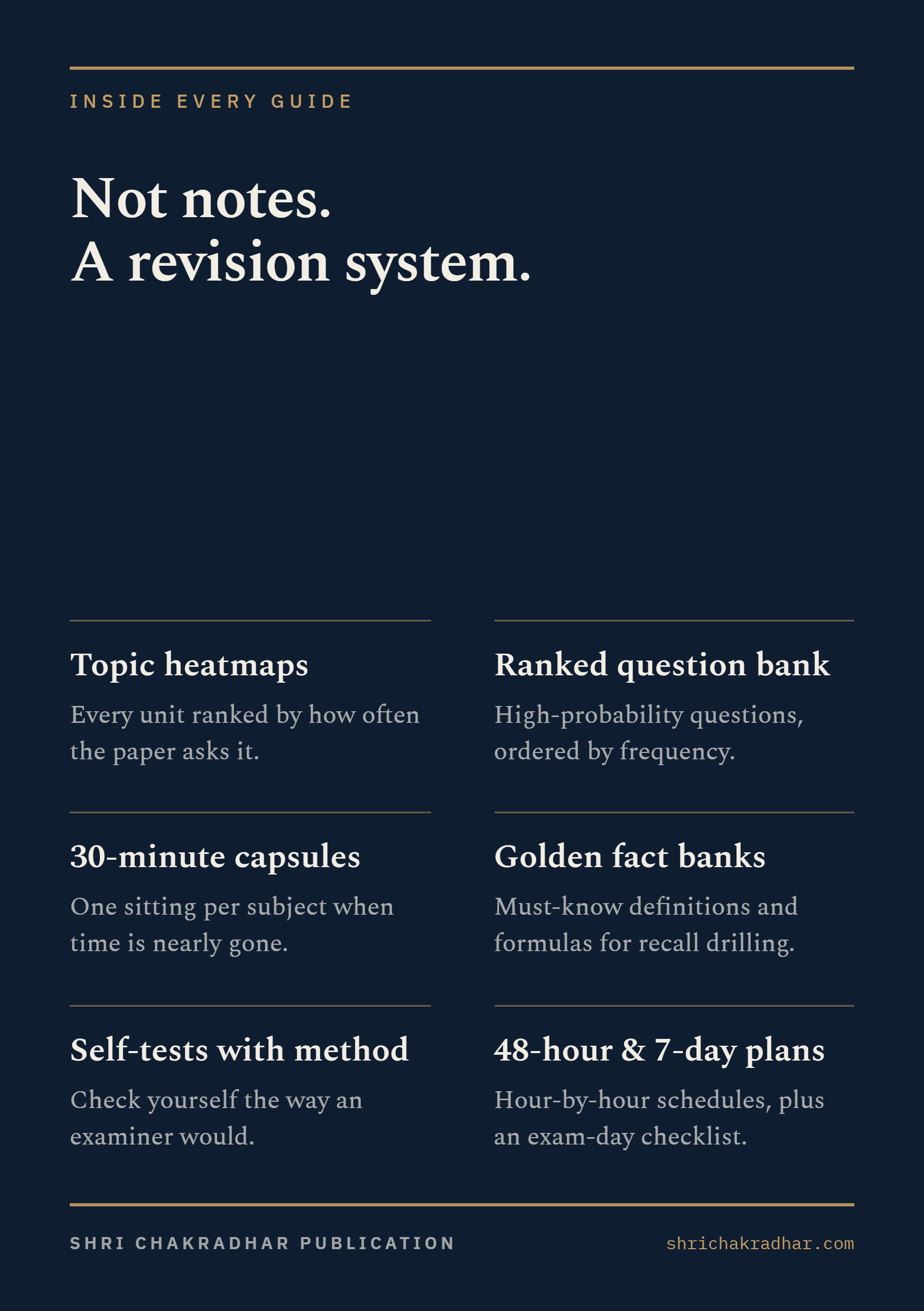
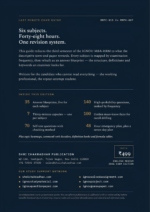
- 120 high-probability Q&As with a separate Exam Note after every model response
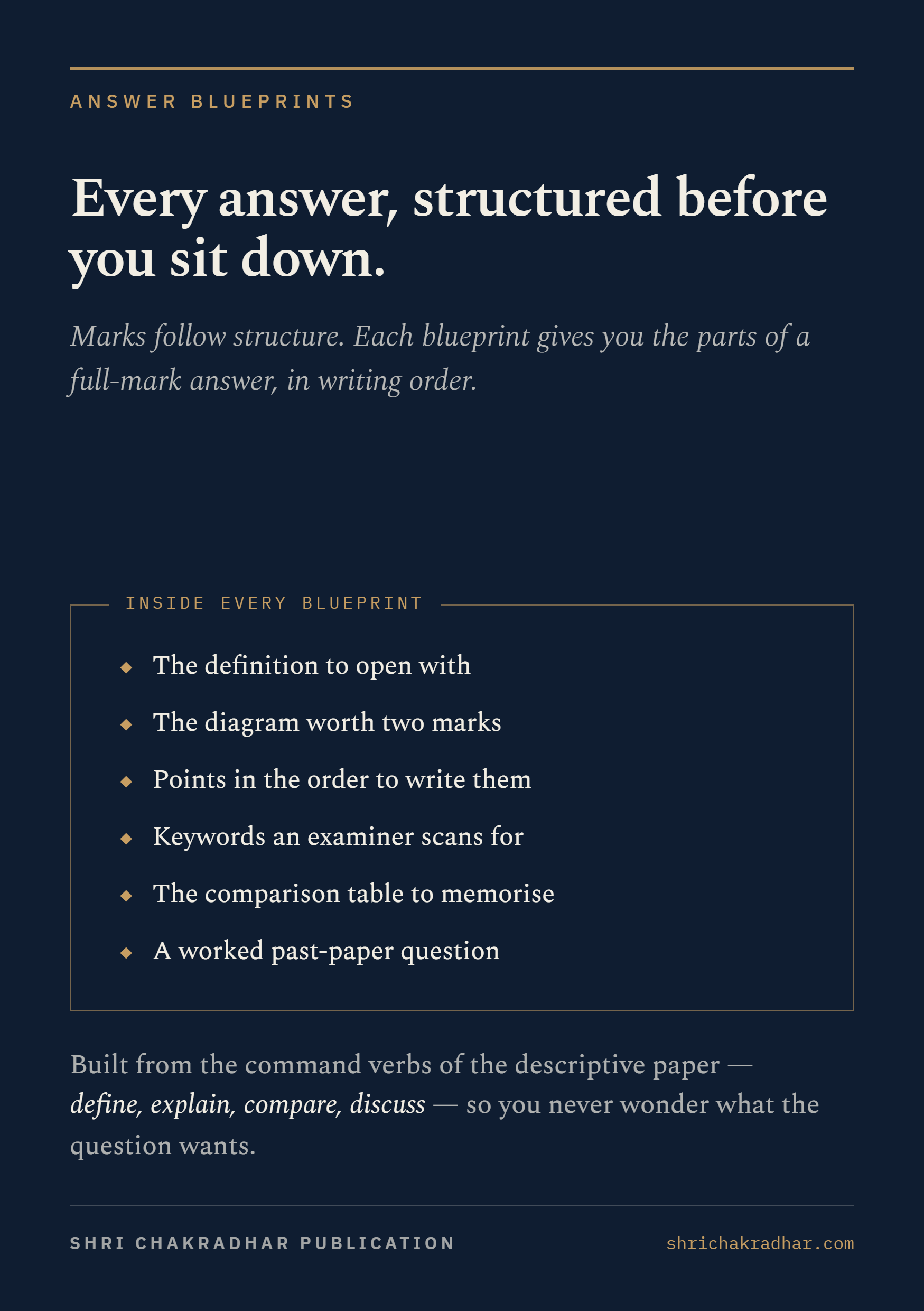
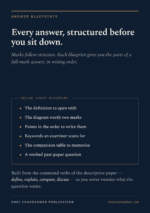
- 30 reusable Answer Blueprints for processes, theories, comparisons, statutes, formulas and applied cases
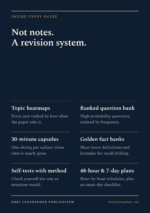
- 6 heatmaps, 6 command decoders and 6 revision toolkits built around each paper’s writing demands
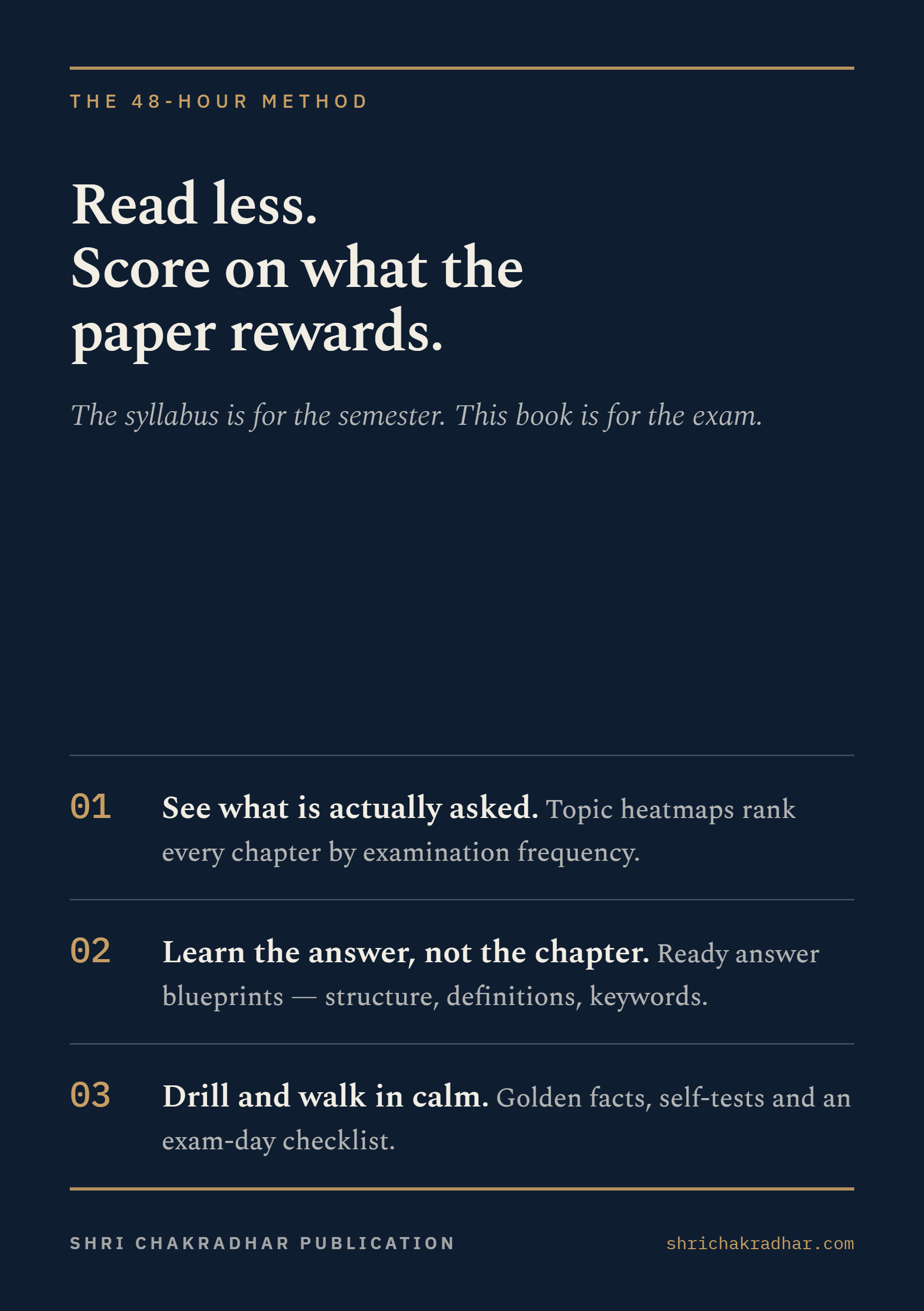
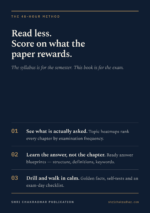
- 6 thirty-minute capsules plus reading routes for 48, 24, 12, 6, 3 and 1 hour
- 100 golden facts and 60 self-test questions with an answer key for final recall
Prepared for HRM-specialisation learners balancing distance study, work commitments and six different examination styles alongside IGNOU’s prescribed material.
Written by BK Sahni — IGNOU education expert and author, guiding distance-learning students since 2010.
IGNOU MBA (HRM) Third Semester Book — Six Papers Linked by People, Organisations and Employment Systems
The IGNOU MBA (HRM) Third Semester Book is a 153-page English Medium Last Minute Exam Guide for the 2027 Exam Edition. It brings together MMPC-015, MMPC-016, MMPH-001, MMPH-002, MMPH-004 and MMPH-007 in one combined revision volume for the June and December Term-End Examinations. The title is available on IGNOU Study Material, an independent platform for exam-focused IGNOU help books.
The six papers form a connected path from managerial research and international business to organisation design, employee development, industrial relations and compensation. Because their answer styles differ, this guide does not treat them as interchangeable notes. It supplies research sequences, thinker-led theories, design frameworks, Indian HRD models, statute-based employment answers and reward calculations through a repeated chapter system intended for revision after the prescribed material has been studied.
About the IGNOU MBA (HRM) Third Semester
The IGNOU MBA (HRM) Third Semester combination represented here contains two common management courses and four Human Resource Management specialisation papers. MMPC-015 develops the evidence and analysis needed for management decisions, while MMPC-016 places business activity in a cross-border setting. The MMPH subjects then examine how organisations are designed, how employee capability is developed, how employers and workers regulate their relationship, and how pay and rewards are structured.
This range requires the learner to move between statistical procedures, trade theories, contingency design, OCTAPACE values, labour statutes and wage calculations. The book therefore preserves one navigation pattern but changes the examination method inside every chapter.
What This Book Covers
The book contains six subject chapters, and every chapter follows the same A-to-F structure. Students can first identify the paper’s recurring themes, then select an answer framework, study the model responses, review the reference tools and finish with a condensed capsule.
- Section A — Subject Opener and Topic Heatmap: records the course structure, paper character, writing strategy and probability guidance for major topics.
- Section B — Command Verb Decoder: shows how discuss, explain, distinguish, evaluate, calculate, illustrate and critically examine demand different answer forms.
- Section C — Five Answer Blueprints: provides adaptable structures, compact sample skeletons and subject-specific keyword banks.
- Section D — Twenty High-Probability Q&As: presents selected model responses, including comparisons, theories, procedures, statutes, calculations and case-based practice, with an Exam Note after every answer.
- Section E — Revision Toolkit: assembles thinkers, definitions, formulas or legal provisions, comparison tables and recurring mistakes for the particular course.
- Section F — Thirty-Minute Revision Capsule: reduces each paper to five central concepts, selected questions, emergency starters and golden keywords.
Across the six chapters, the verified totals are 30 Answer Blueprints, 120 model Q&As, 120 Exam Notes, 12 case-based practice items, six heatmaps, six command-verb decoders, six toolkits and six final-half-hour capsules. The front and back matter add a semester dashboard, time-based routes from 48 hours to 1 hour, 100 golden facts, an exam-day checklist, 60 self-test questions and a complete answer key.
Subject-wise Coverage
MMPC-015: Research Methodology for Management Decisions
MMPC-015 is organised around the order in which a sound management study is built. The chapter covers research meaning and types, problem formulation, exploratory, descriptive and causal designs, primary and secondary data, questionnaire construction, attitude scales, probability and non-probability sampling, reliability, validity, data processing, hypothesis testing, chi-square, t-tests, ANOVA, correlation, regression, report writing and ethics. Kerlinger, Fisher, Pearson, Likert and Cronbach anchor the toolkit. Numerical patterns require hypotheses, formulas, variable definitions, a decision rule and managerial interpretation, while comparison answers separate sampling methods, data sources and test families.
MMPC-016: International Business Management
MMPC-016 builds an examination ladder from trade theory to multinational operations. It revises globalisation, domestic versus international business, Smith and Ricardo, Heckscher-Ohlin, Vernon, Dunning’s OLI Paradigm, foreign-market entry modes, WTO agreements, regional integration, strategic alliances, international structures, the global marketing mix, Hofstede’s dimensions, expatriate management, foreign exchange, Balance of Payments, logistics and cross-border risk. The chapter links authors and years with Indian or multinational examples such as Maruti-Suzuki, Tata-JLR, Hindalco-Novelis and Infosys. Comparison tables clarify licensing, franchising, FDI, FPI, standardisation and adaptation.
MMPH-001: Organisational Theory and Design
MMPH-001 treats structure as a question of fit rather than fashion. Coverage moves through Taylor, Fayol, Weber, Mayo, systems and contingency thinking, organisational effectiveness, complexity, formalisation, centralisation, span of control, departmentation, delegation and design factors. Mintzberg’s five parts and configurations, mechanistic and organic forms, functional, divisional, matrix, boundaryless, virtual and network organisations, job enlargement, enrichment, the Job Characteristics Model, power, politics and conflict are also included. The toolkit connects Chandler, Woodward, Burns and Stalker, Hackman and Oldham, Herzberg and Mintzberg to Indian Railways, Infosys, Flipkart, Reliance and the Tata group.
MMPH-002: Human Resource Development
MMPH-002 follows the Indian HRD lineage from Leonard Nadler’s 1969 definition to the Pareek-Rao system introduced at L&T in 1975. It covers HRD goals, mechanisms, climate, OCTAPACE, competency mapping, the Spencer iceberg, training-need assessment, Kirkpatrick evaluation, performance and potential appraisal, coaching, mentoring, career anchors, talent management, succession, learning organisations, HRD and industrial relations, diversity, HRIS, analytics and development in a VUCA environment. The chapter distinguishes personnel management from HRD, organisational climate from HRD climate, coaching from mentoring and training from development, while retaining a developmental rather than merely administrative perspective.
MMPH-004: Industrial and Employment Relations
MMPH-004 combines classical industrial-relations ideas with Indian institutions and statutory numbers. The chapter covers the Webbs, Dunlop’s three actors and web of rules, unitary, pluralist and radical perspectives, trade unions, CTUOs, collective bargaining, distributive and integrative negotiation, Fisher and Ury’s principled method, labour administration, tripartite and bipartite bodies, workers’ participation, grievance handling, discipline, standing orders, domestic enquiry, strikes, lockouts, lay-off and retrenchment. It also revises the Industrial Disputes Act, 1947 machinery and Industrial Relations Code, 2020 points including the 51% negotiating-union rule, 300-worker thresholds and 14-day strike notice.
MMPH-007: Compensation and Rewards Management
MMPH-007 combines wage theory, statutory entitlements and reward design. Learners revise compensation objectives, direct and indirect returns, Ricardo, Mill, Walker and Clark, Maslow, Herzberg, Adams and Vroom, minimum, fair, living and need-based wages, the 15th Indian Labour Conference norms, the Code on Wages, 2019 and its 50% allowance cap, job evaluation, wage surveys, time-span of discretion, pay commissions, wage boards, incentives, bonus, profit sharing, ESOPs, competency pay, executive compensation and non-financial rewards. The toolkit retains figures such as bonus at 8.33% to 20%, gratuity at 15/26 and provident-fund contributions at 12%.
MMPC-015 to MMPH-007 at a Glance
| Code | Subject Title | Main Revision Area | What You Take Away |
|---|---|---|---|
| MMPC-015 | Research Methodology for Management Decisions | Design, measurement, sampling, testing and reporting | Sequential research answers with formulas and evidence-based conclusions |
| MMPC-016 | International Business Management | Trade theories, entry modes, WTO, culture and global functions | Thinker-year propositions connected to cross-border examples |
| MMPH-001 | Organisational Theory and Design | Effectiveness, structure, contingency, modern designs and jobs | Framework-led design answers based on organisational fit |
| MMPH-002 | Human Resource Development | HRD systems, climate, competencies, careers and learning | Developmental answers grounded in Indian HRD models |
| MMPH-004 | Industrial and Employment Relations | Unions, bargaining, disputes, institutions and labour regulation | Statute-aware responses with actors, procedures and key thresholds |
| MMPH-007 | Compensation and Rewards Management | Wages, legal definitions, job evaluation, incentives and rewards | Theory-and-number answers for fair and defensible pay systems |
Key Features — All Verified From the Book
- 6 courses in one 153-page English Medium book, covering two core papers and four MBA (HRM) specialisation subjects.
- 30 Answer Blueprints, with five reusable frameworks allocated to every course.
- 120 high-probability Q&As, created from twenty selected questions in each chapter.
- 120 Exam Notes and 12 case-based practice items, adding answer-specific cautions and applied decision situations.
- 18 subject navigation tools, comprising six heatmaps, six command decoders and six revision toolkits.
- 6 thirty-minute capsules, one for immediate revision before each paper.
- 6 time-based reading routes, covering preparation windows of 48, 24, 12, 6, 3 and 1 hour.
- 100 golden facts and 60 self-test questions, followed by an answer key and score interpretation.
- One exam-day checklist covering preparation, answer planning, writing and post-paper transition.
Who Should Use This Book
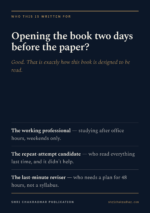
This combined guide is intended for IGNOU MBA (HRM) Third Semester learners whose registered papers match the six listed codes. It is suited to distance learners and working professionals who have read the prescribed blocks but need one method for six different examination languages: research procedure, international theory, organisation design, developmental HR practice, labour relations and compensation law.
It is also useful when a student knows the topic but hesitates over presentation. The chapter blueprints indicate when to number steps, name a thinker and year, build a comparison table, cite a statute, include a threshold or complete a short calculation.
How This Book Helps Students
The book turns a broad HRM semester into a sequence of answer decisions. Heatmaps identify the areas the guide treats as higher revision priorities. Command decoders explain whether the examiner is asking for a balanced discussion, a comparison, a procedure, an evaluation or an applied response. Blueprints then match that task to the course: research in process order, international business through theory and example, organisation design through contingency, HRD through mechanisms and climate, industrial relations through actors and law, and compensation through theory, statute and numbers.
The model answers demonstrate those choices, while the Exam Notes expose frequent gaps. Toolkits collect the names, formulas, definitions, comparisons and provisions that are easy to confuse, and the capsules, facts and self-test shorten the same material into progressively faster recall.
This Exam Guide and IGNOU’s Official Study Material
This exam guide supplements the university’s prescribed learning resources; it does not replace them. IGNOU blocks contain the complete explanations, unit progression and academic context needed for first-time study. Students can download the official IGNOU MBA (HRM) study material free in PDF from eGyankosh and should use those materials as the primary source for every registered course.
The present book serves the later revision stage. It reorganises selected concepts around response construction, probability guidance, legal or numerical accuracy and timed recall. Any topic from the applicable syllabus may still be examined, including an area given lower emphasis in the heatmap.
Why Choose This Last Minute Exam Guide
The differentiator is its paper-specific answer engineering across one HRM-focused volume. MMPC-015 requires orderly research logic and statistical decisions; MMPC-016 depends on theorist-year chains; MMPH-001 demands a contingency conclusion; MMPH-002 uses India-rooted HRD models; MMPH-004 is strengthened by statutes, institutions and thresholds; and MMPH-007 requires the figures behind wage and reward rules. The common architecture makes navigation consistent without reducing the subjects to generic notes.
The guide also states its boundary clearly. Its high-probability labels are revision estimates rather than confirmed questions, the short reading routes assume prior study, and the university material remains the foundation.
About the Author — BK Sahni
BK Sahni (Bhavya Kumar Sahni) is an IGNOU education expert, author, and the founder of Shri Chakradhar Publication Pvt. Ltd. and ignouproject.com, and he has guided 5,00,000+ IGNOU distance-learning students since 2010. He writes the Last Minute Exam Guide series — including this book — building every title on the method he has refined across a decade of IGNOU-focused work: high-probability questions, reusable answer blueprints, topic heatmaps and quick-revision capsules aligned to the current IGNOU exam pattern. He also publishes open-access research-methodology guides for IGNOU students, archived with permanent DOIs on Zenodo and indexed on Google Scholar and ORCID (0009-0005-8092-459X). Learn more about his work at bksahni.com, or browse his complete catalogue of IGNOU books on the Amazon Author Store.
How to Use the Book Effectively
Begin with the semester dashboard and identify the method that causes the most difficulty, not simply the longest course. Read Section A for priorities and Section B before attempting a response. Memorise the logic of the five blueprints, then close the model and reproduce selected answers by hand. For MMPC-015, practise hypotheses and numerical decisions; for MMPC-016 and MMPH-001, attach theories to examples; for MMPH-002, draw OCTAPACE or the competency iceberg; for MMPH-004, write statute names and thresholds; and for MMPH-007, retain every percentage, divisor and wage definition.
Select the 48-, 24-, 12-, 6-, 3- or 1-hour route according to preparation already completed. Extend answer practice with IGNOU previous years solved question papers, and use free IGNOU study support and resources on IGNOU Project for supplementary academic guidance. Complete all 60 self-test questions, revise only the errors, and reserve the relevant Section F capsule for the final half hour before that paper.
Frequently Asked Questions
Which subjects and codes are covered in this IGNOU MBA (HRM) Third Semester Book?
The book covers six courses: MMPC-015 Research Methodology for Management Decisions, MMPC-016 International Business Management, MMPH-001 Organisational Theory and Design, MMPH-002 Human Resource Development, MMPH-004 Industrial and Employment Relations, and MMPH-007 Compensation and Rewards Management. Each course receives a separate six-section revision chapter.
Is this product one combined book or six separately bound helpbooks?
It is one combined 153-page English Medium book. The six subjects remain separated by code and chapter, but they use a common route from heatmap and command decoder to blueprints, model Q&As, toolkit and thirty-minute capsule. The order therefore gives semester-level convenience without merging the subject content.
Is the guide useful for the June and December IGNOU Term-End Examinations?
Yes. The 2027 Exam Edition is structured for revision before the June and December Term-End Examinations. It supports descriptive, comparative, statutory, numerical and application-based answer writing. The high-probability labels help prioritise time, but they do not identify a confirmed future paper.
Does the book contain solved assignments, full PYQ papers or a separate guess paper?
No. Solved assignments, complete previous-year question papers, handwritten submissions and a standalone guess paper are not included. The book instead provides 120 selected model Q&As, 30 reusable frameworks, six toolkits, case-based practice, a golden-fact bank and a self-test. Separate resources are needed for full assignment or PYQ requirements.
Can this 153-page revision guide replace the prescribed IGNOU MBA (HRM) material?
No. The guide cannot replace IGNOU’s prescribed blocks because it condenses selected concepts for retrieval and examination practice. Read the official material for complete unit explanations, then use this book to organise answers, check thinkers or provisions, rehearse calculations and compress the final revision period.
Who should consider buying this HRM-specialisation study guide?
The appropriate reader is an IGNOU MBA (HRM) Third Semester student registered for the six codes printed on the cover. It is particularly relevant to working professionals, distance learners and students who need one organised method for research, international business, organisation design, HRD, employment relations and compensation.
How should the six time-based reading routes be used?
The routes should be selected according to prior preparation. The 48-hour path covers all six courses in focused blocks and includes consolidation, while progressively shorter options move towards high-priority questions, blueprints, capsules and golden facts. The 1-hour route is a recall sweep, not a substitute for learning the semester.
Will all 120 high-probability questions appear in the examination?
No. The questions and heatmap ratings are stated in the book as guidance based on past-paper patterns and topic prominence. They are useful for allocating limited revision time, but an examiner may ask any question from the applicable syllabus. Students should not skip the wider course content solely because it has a lower probability label.
Should students verify the current syllabus and course combination before ordering?
Yes. Check www.ignou.ac.in for the latest MBA (HRM) structure, registered course codes, study material, date sheet and examination instructions. Verification is important because this product follows a specific Third Semester combination, and a later programme revision or a different elective set may not match the six courses in the book.
Important Note on Syllabus Verification
IGNOU periodically updates its programme structure, assignment requirements, examination schedule and study material. Before purchasing and while preparing, students should verify the latest MBA (HRM) syllabus, course list, date sheet and official instructions on the official IGNOU website (www.ignou.ac.in). This book is aligned to the MMPC-015, MMPC-016, MMPH-001, MMPH-002, MMPH-004 and MMPH-007 structure and refreshed as an annual exam edition, but official IGNOU sources are always the final authority.
Non-Affiliation Disclaimer
ignoustudymaterial.com is an independent educational publishing platform. This book and this website are not officially affiliated with, endorsed by, or operated by the Indira Gandhi National Open University (IGNOU). Course codes such as MMPC-015, MMPC-016, MMPH-001, MMPH-002, MMPH-004 and MMPH-007 are used solely to identify the subjects the book covers. IGNOU’s official study material and notifications remain the primary and authoritative sources for the programme.
Get Your Copy
Choose this combined revision book when you need one structured route across the six listed MBA (HRM) Third Semester papers. Use it beside the prescribed blocks, practise the answer frameworks and save the capsules for immediate recall. For digital access, get the IGNOU MBA (HRM) Third Semester Book (MMPC-015 to MMPH-007) — Combined Last Minute Exam Study Guide as a soft-copy PDF on WhatsApp.
| Weight | 250 g |
|---|---|
| Dimensions | 22 × 16 × 1 cm |


Reviews
There are no reviews yet.